






 David Myles
While extensive data pertaining to the Ethnicity Pay Gap is arguably scarce, research shows that the ethnicity pay gap has compounded within many sectors in the UK. For example, a 2025 Marketing Week’s Career and Salary survey declared that in 2024 the ethnicity pay gap for a full-time worker was 8.5%, but by 2025 this figure had escalated to just over 13%.
Except for a person identified in Schedule 19, or armed forces not stated in the schedule, or a government department, equal pay is legally bound by the Equality Act 2010. Under this legislation, employers are required to pay the same wages to men and women undertaking the same work. Since 2017, all employers who have 250 or more employees are compelled to publish data illustrating the pay of male and female workers.
Figures suggest that mandatory gender pay reporting has reduced the golf of disparities between male and female workers, albeit marginally. Recent data shows a decline from 7.1% in the first quarter of 2024 to 6.9% in the first quarter of 2025.
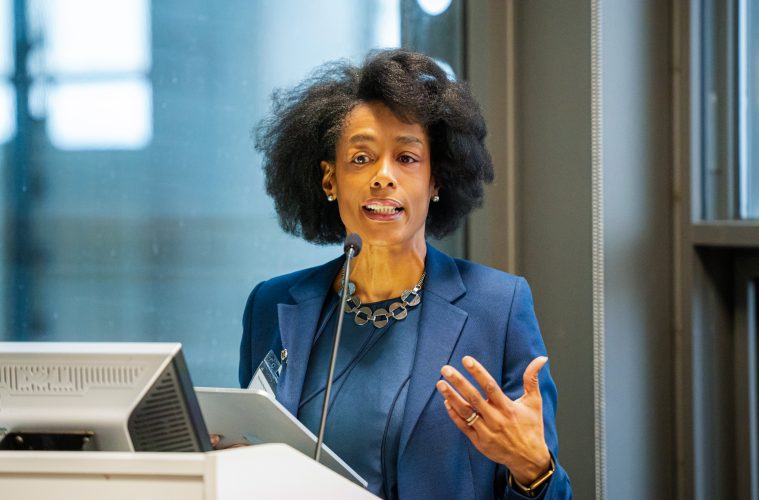
Many campaigners have been painstakingly calling for the same mandatory reporting that came into fruition for gender to be expanded to encompass the ethnic pay gap. One such vocal individual is the founder of the Ethnicity Pay Campaign, Dianne Greyson. Dianne founded the Ethnicity Pay Gap Campaign 8 years ago, which became a popular hashtag on social media platforms such as what was formerly known as Twitter (now X), Facebook, and LinkedIn. In 2021, Dianne launched the Ethnicity Pay Gap Day, which takes place annually on the 8th of January.
Now in its sixth year, Dianne says ‘’We are getting more engagement, which is great. This is an opportunity for organisations to demonstrate their commitment to closing the Ethnicity Pay Gap. Albeit they [employers] hold an event for their employees, or they might want to hear the data that they gathered on that day.
Reflecting on the most recent Ethnicity Pay Gap Day on January 1st 2026, Dianne said: ‘’The day went very well. Lots of interaction. The day was featured in the Times, Guardian and independent.’’
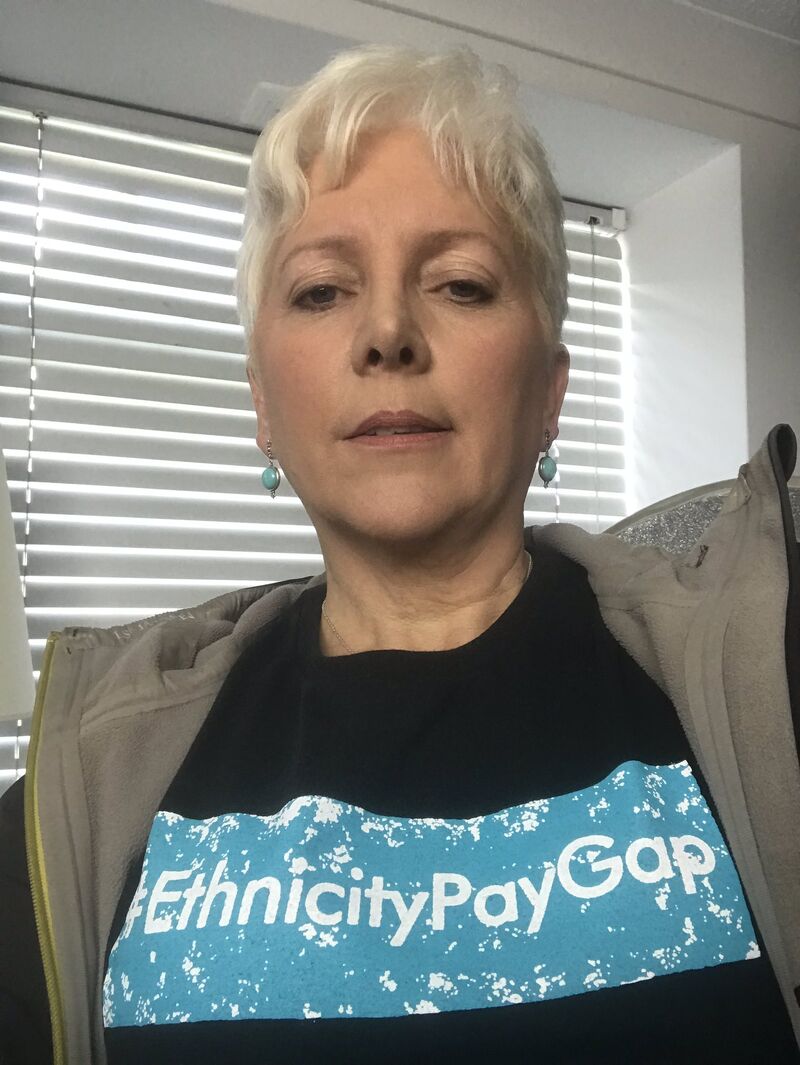
Former BBC News Journalist, Carrie Gracie
On the Ethnicity Pay Gap Day 2026, former BBC News reader, Carrie Gracie was seen on social media garbed in an Ethnicity Pay Day T-shirt. Best known for being the China editor for BBC, the Scottish journalist resigned in 2018 after claiming she received less pay than her male counterparts, which led to the BBC administering several years of backdated pay for her role as a journalist.
Last year, West London Labour MP, Seema Malhotra, who at the time was serving as Minister for Equalities, acknowledged Dianne’s self-sacrificing commitment to the ethnicity pay disparities. Something that Dianne is vehement about building momentum on.
Recently, in both Manchester (A62 Oldham Road, Manchester M40 8AZ) and London (Thornton Heath Road, Croydon), there were billboards to accentuate the ethnicity pay gap.
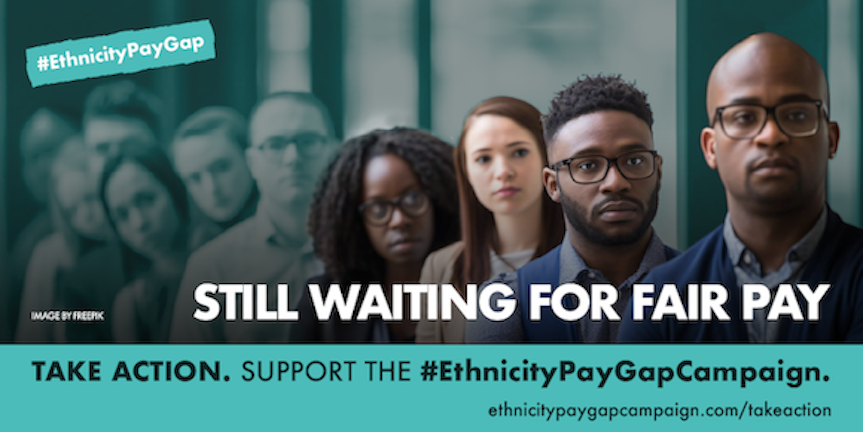
The billboards were a poignant picture of Black, Asian and other global majority heritage individuals, accompanied by the text Are you still waiting for fair pay? The billboards were viewable in both locations until the 16th of January 2026. ‘’We are encouraged people to going and visit it [billboards] and to take a picture or do a video and share it on social media’’ says the HR specialist.
The purpose of the billboards, Dianne says sternly, stems from the absence of an update of the Equality (Race and Disability) Bill: mandatory ethnicity and disability pay gap reporting, Government consultation which closed in June 2025.
With a look of suspense, Dianne says ‘’We expect the results of the consultation to come out early this year’’. In terms of the proposed bill – Equality (Race and Disability) Bill: mandatory ethnicity and disability pay gap reporting; Dianne has expressed content about the bill. ‘’The ethnicity pay day gap campaign has been going since 2018. We are now in 2026. I am very pleased. We have waited far too long this to happen, but I am glad it is happening’’.
While such a bill, if legislated, would arguably have profound implications for those at the receiving end of ethnicity pay disparities and for organisations being obligated to address the issue rather than tap-dancing around it, Dianne wants the reporting on ethnicities to extend to organisations that employ fewer than 250 people. However, she acknowledges the GDR implications if individuals who are deemed to constitute the ethnicity pay disparities can be identified. Dianne affirms that this can be achieved, ‘’but it has to be done in a way that it is not going to do any harm, or damage to the individuals concerned.’’
I don’t see any evidence. Clear evidence anyway, that shows what organisations have done to improve the situation
Reporting the ethnicity pay gap should not just be a tick-the-box exercise in performative Olympics. The organisation Action for Race Equality (ARE) recommends that organisations mimic their reporting in line with the GSS Harmonised data standards for ethnicity to ensure that a more comprehensive understanding of the gaps that exist between different ethnicities is showcased.
Dianne said: ‘’I think it is a good idea, particularly if it means the end of White versus Other reporting. A lot of organisations do White versus Other reporting which isn’t an accurate way to deal with the ethnicity pay gap. It is a very complex issue. A harmonised standard is something that would be beneficial’’.
In the UK, it has been purported that over half of organisations have revised their Equality, Diversity and Inclusion (EDI) trajectories. Close to 30% of businesses have diminished their commitment to EDI initiatives or have forsaken commitments entirely. A large portion has found a middle ground, using more euphemistic language such as ‘inclusivity’ and ‘wellbeing’.
Despite the curbing of EDI initiatives, Dianne says she hasn’t seen much difference. She admits that she has seen more organisations sharing their data concerning the ethnicity pay gap but questions the significance of this data reporting.‘ ’What have they done with it [ethnicity reporting]?’’ she asks sceptically. ‘’I don’t see any evidence. Clear evidence anyway, that shows what organisations have done to improve the situation’’ adds Dianne.
Discourses about the ethnicity pay gap remain silent when stating what organisations that have reported their pay disparities are tangibly doing to combat their inequities. ‘’What is the evidence? Are you [organisations] sharing the data and sharing what you have done about it? I would argue there is hardly any organisations that are doing that’’ says Dianne.
On Monday, the 9th of February 2026, Dianne will be hosting the Ethnicity Pay Gap Summit at the London Stock Exchange. The event was initially published in November 2025, and within 48 hours, tickets were sold out.
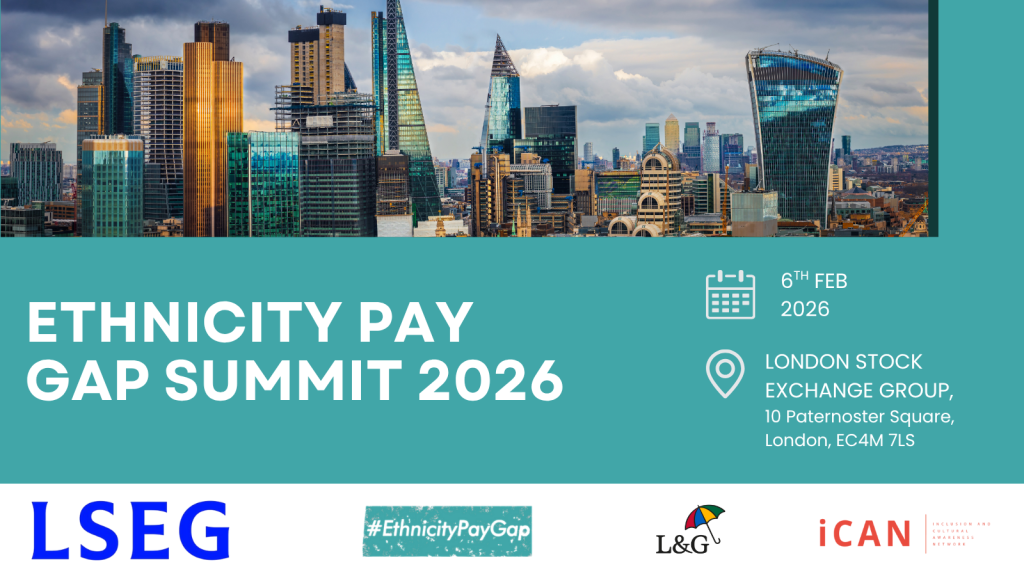
Dianne has been laboriously working behind the scenes organising an Ethnic Pay Gap networking event in June 2026. Speaking about what will be the second Ethnic Pay Gap Networking event, the author of Business Culture Reviews said: ‘’One would assume that the government would have given us feedback on the consultation [Equality (Race and Disability) Bill] and given us an idea of the direction that of channel they plan to go in. It is a good opportunity for people to come together and discuss what their current plans could be and talk about what potential support they might need.’’
Notwithstanding the continued success of the campaign, Dianne believes some of the biggest challenges pertain to a lack of community understanding about the issue. She argues, if there was a better grasp of the campaign, more people would be supporting the campaign.
Connect or follow Dianne Greyson on LinkedIn
To remain updated, readers are encouraged to actively monitor the Ethnicity Pay Gap Campaign website
Support the Ethnicity Pay Day Campaign by purchasing merchandise