



















 David Myles
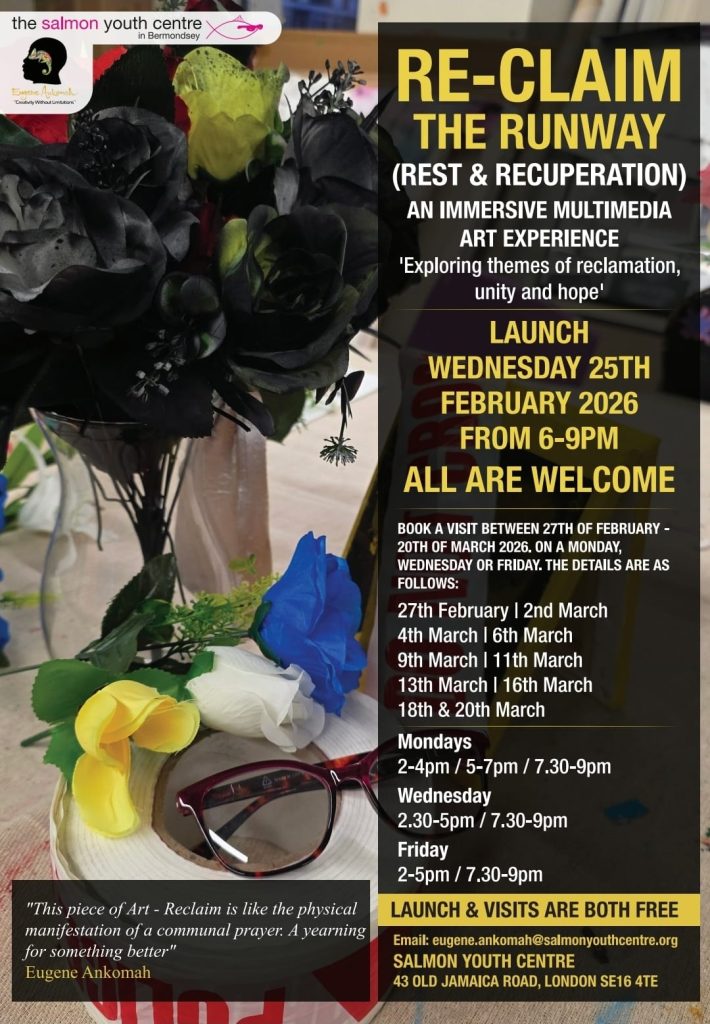
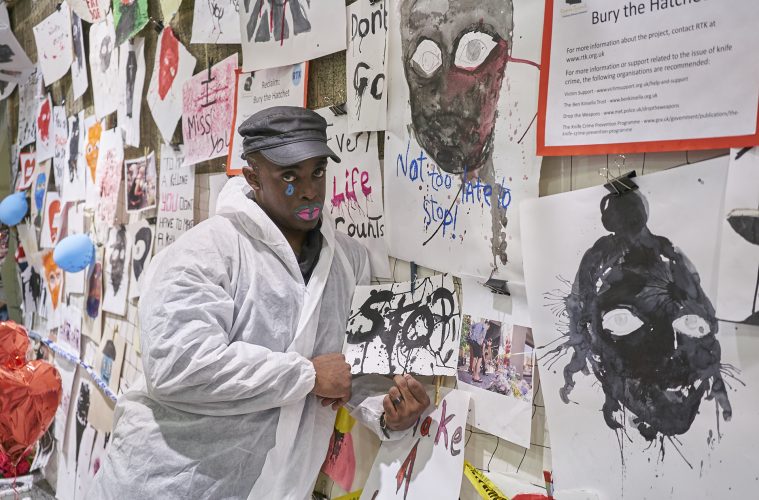
Now approaching its fifth iteration, the Reclaim project will return to Southeast London’s The Salmon Youth Centre, where it came into fruition back in 2018. On this occasion, the young people involved in the project will be encompassing a more theatrical role.
Originally intended to take place towards the end of 2025, Eugene Ankomah is somewhat elated that the Reclaim project has been delayed.
Reviewing the timing of the forthcoming project, Eugene said: ‘’When you are about to start the new year, there is a sense of renewal. With that in place, symbolically for almost everybody, I felt like it would be better to send out our message with this project that we want this year to be different.’’
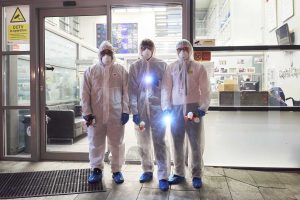
On the launch of the Reclaim project, which will be on Wednesday, the 25th of February, readers can anticipate the project to be divided into three segments. The initial stage of the session will be primarily tailored towards young people where there will be what Eugene refers to as an ‘‘incident trail’’ where attendees entering the venue will encounter young people apparelled in Personal Protective Equipment (PPE) such as face masks, gloves, shoe covers, and headcovers accompanied with Tyvek suits that are reminiscent to the prominent Las Vegas drama series CSI. The young people will then offer flowers to attendees.
Afterwards, visitors will be ushered to the rear of the building by young people, where the incident trail will officially begin. ‘’On this incident trail, they will see different things presented, which will give clues as to what has potentially happened. In this case, we are talking about mostly young people, but any member of the public who would have been hurt, cut, attacked, or murdered’’ says Eugene.
The incident trail will consist of other materials, such as police barricade tape and disparate objects scattered on the floor connected to the crime scene, as well as sensuous forms of expression, such as a ghost bike. The audience is then guided by young people to the installation where they will see a ‘’continuation of clues that lead to the big thing’’ says Eugene.
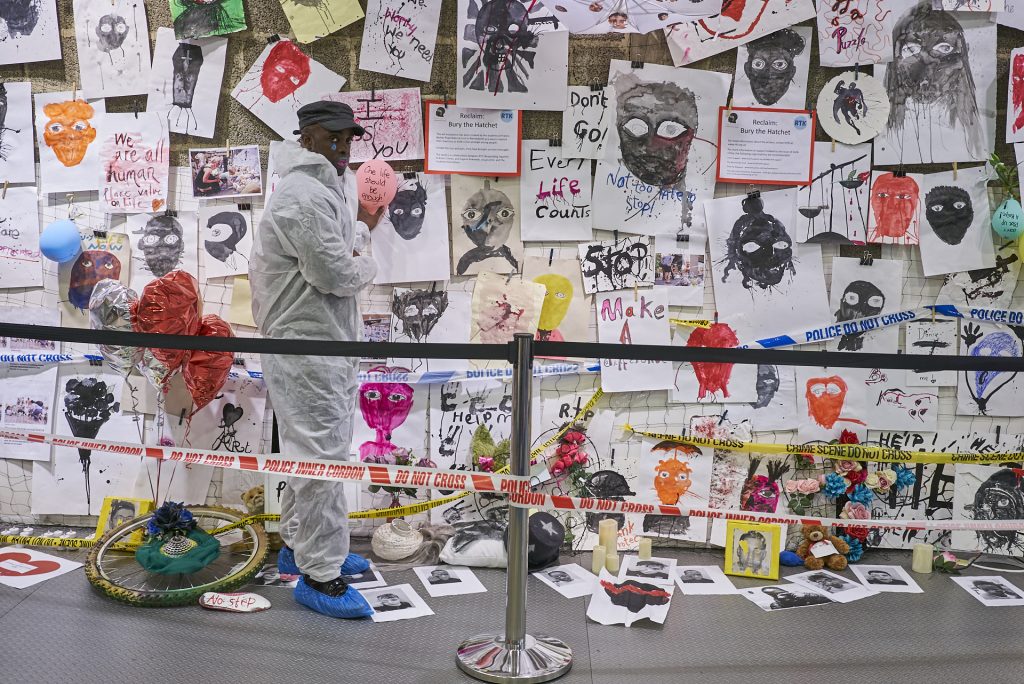
To ensure that the audience is truly captivated in the installation, Eugene and his team have generated an aura through smell, sight and sounds such as burning, police sirens, people screaming, and crying to invoke internal stimuli of the environments, which far too many people are traumatised by impulsive forms of violence. The use of sensorium will be incrementally orchestrated.
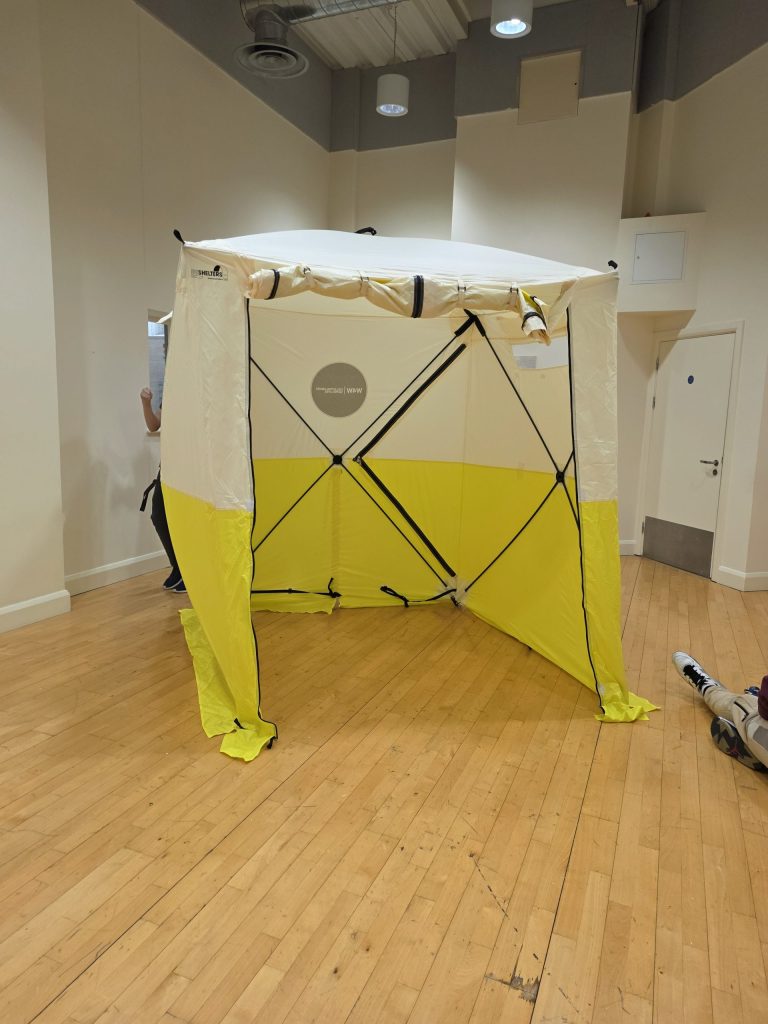
Attendees of the installation will be presented with a forensic tent, which will be fully zipped up. Eugene’s use of the tent is to exemplify safety, shelter and to maintain dignity to the person who has been killed.
‘’When we get to the second stage, there will be what I call a runway. ‘’As people interact and immerse themselves in the experience, we will make a kind of pathway where the young people walk into the tent slowly,’’ says the visual artist. To reflect visual changes of the environment, the sound will morph into what Eugene describes as ‘’the sounds of the street and the troubles of the street.’’ To emphasise his point, Eugene mentioned ambulances, police cars, parents exhibiting their consternation, and other spectators using emotive language to convey their anguish.
Once the young people who will at this stage be dressed in casual clothing have entered and vacated the forensic tent, their clothing will be identical to that of a forensic scientist. ‘’Again, they will have the gloves, the shoe covers,’’ says Eugene. Additional items, such as umbrellas, will be held to indicate that rain is falling. The umbrellas will have symbols, which Eugene wishes to maintain a degree of suspense for the actual event. Some will be carrying umbrellas, while others will be carrying pelican cases and other forms of investigative kits, which will be accompanied by items such as torches and magnifying glasses.
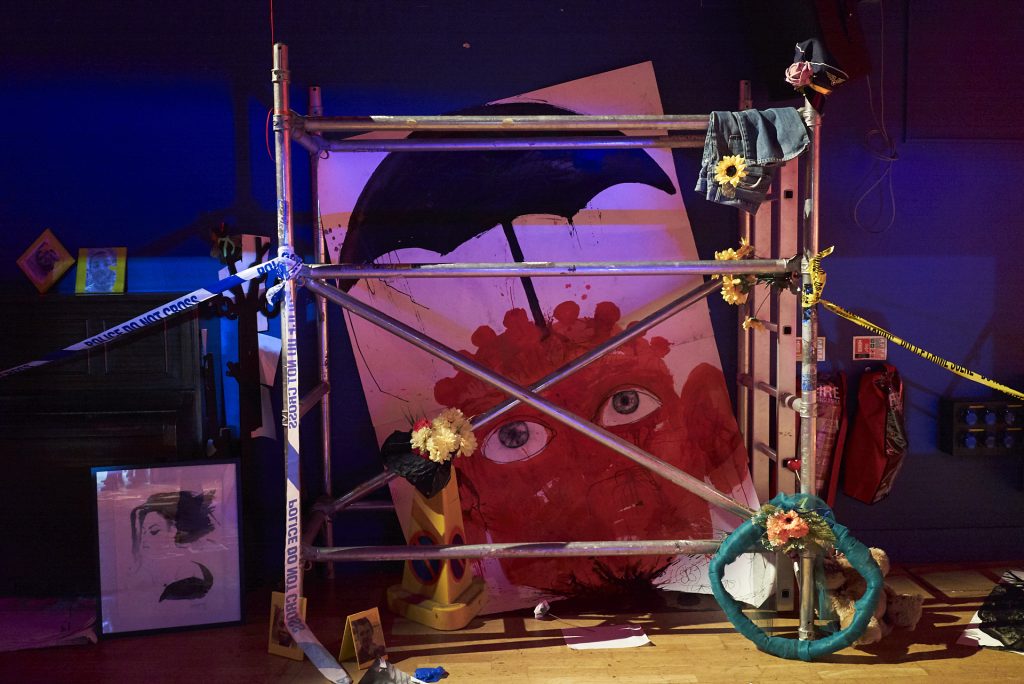
Eugene said: ‘’It’s about a search. It’s all about the investigation. The sounds that led them [the audience] in continue to play, but their body language changes. Everything becomes more confident. The sound will replicate this confidence in the sense that they have been saved, and they have a greater understanding of the situation. They have less fear, and then they walk back out [forensic tent].’’
The act of walking out epitomises the runway, which Eugene said denotes the literal running away from the complications of the streets, but also signifies the runway of fashion models garbed in extravagant clothing. The two paradoxes of the notion of runaway appear distant, but Eugene’s account demonstrates that both concepts share similarities. For some, he argues, the act of using a knife to endanger someone’s life is seen as a fashion, which can be illustrated by brazen behaviour such as recording the stabbings on cell phones and attempting to share the captured violence on social media platforms as if the act was honourable.
Rehearsals for this forthcoming informative installation have begun in the last week, and Eugene said the transition between the second and third stages of the installation will be approximately 20 minutes.
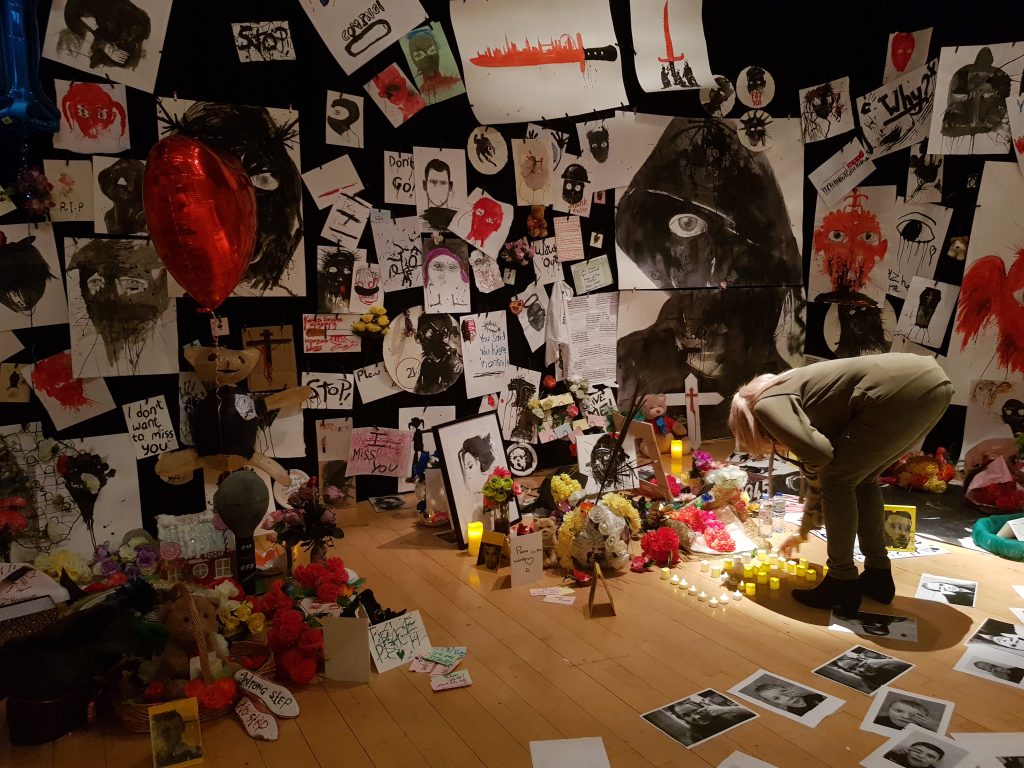
Because of the intensity of stages one and two of the performance, Eugene has used the final stage as a debriefing process, where the audience will interact with each other and read some of the messages omnipresent throughout the installation. The scenery will once again change, lights will diminish, and a trolley will be pushed into the central area of the installation once existing items have been cleared. The atmosphere shifts to what Eugene depicts as ‘’churchy’’ which will resemble what one would expect to hear at a funeral when the casket enters the presence of mourners and is placed on the bier.
Eugene will then open the casket, revealing a distinctively made sculpture which Eugene has recently completed. An image of a knife with the London skyline embedded along its periphery has been turned into a three-dimensional object that will rest in the coffin. Eugene said ‘’It is almost as if it [the sculpture] was a body. The knife represents the body, and this time you have the whole of London represented in this coffin.’’ The knife has been enlarged to 2 metres in length and will rest on a pillow, while the lining of the coffin will consist of young people collaged together.
Barricaded by tape, the audience will then be permitted to view inside the casket, which will be evocative of a funeral setting.
People who have been directly affected by knife crime will play a pivotal role in the installation, from mothers to friends, and those who have been inflicted with the wounds of a knife and who are fortunately still alive.
Recognising the sensitivity of the installation, the team working on the project will display trigger warning signs throughout the installation, and psychotherapists will be present.